 Bridge Construction Hub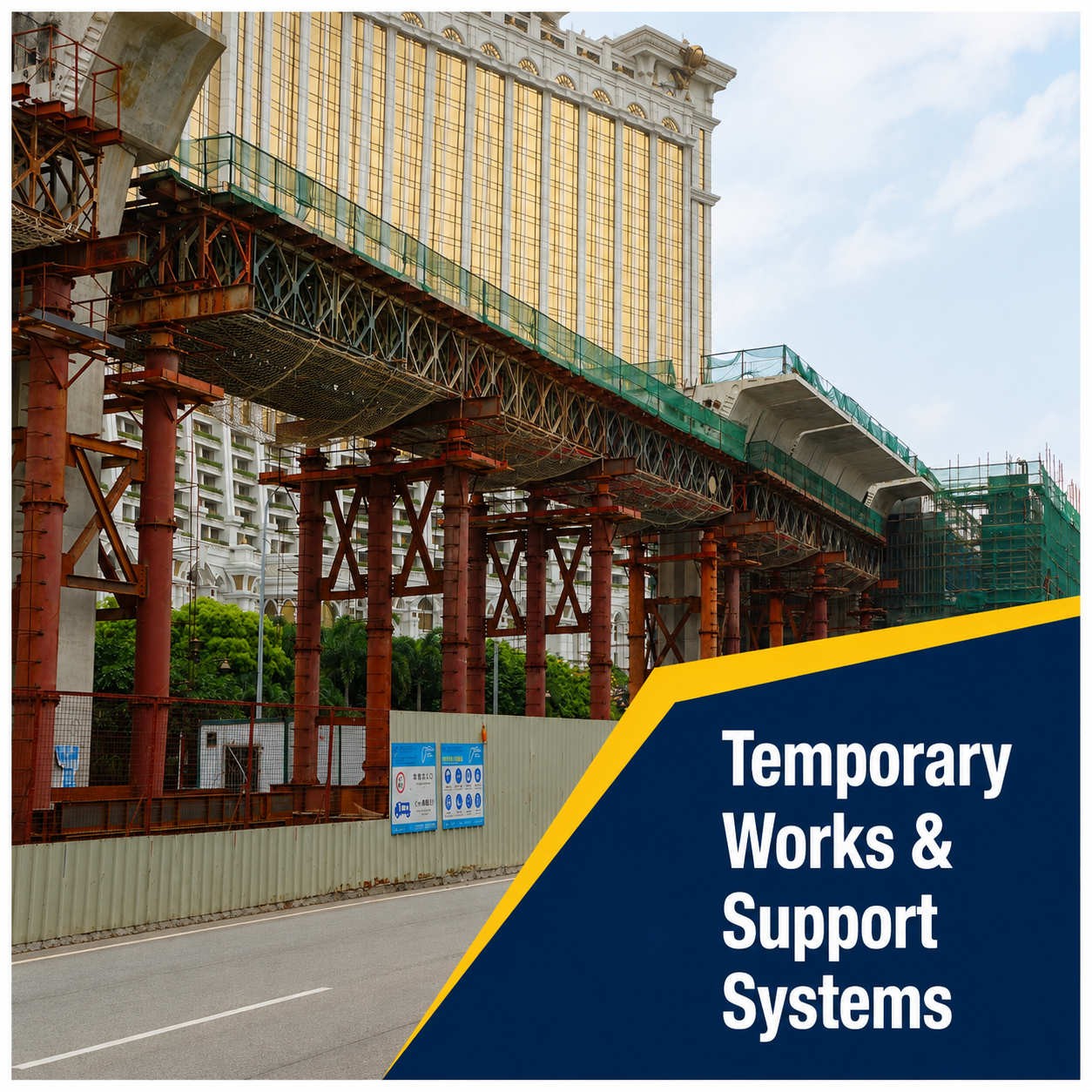
Temporary Works & Support Systems
Temporary Works Solutions for Bridge Construction Projects
Temporary works and support systems are essential components of many bridge construction projects. They provide temporary stability, support, access, and working conditions during construction, installation, lifting, adjustment, and dismantling activities.
Temporary systems may be required at different stages of bridge construction, from foundation and pier works to girder erection, equipment installation, structural adjustment, and dismantling. Based on practical bridge construction experience, BridgeConstructionHub provides technical knowledge and sourcing support for temporary steel structures, support systems, jacking arrangements, working platforms, and related construction equipment and accessories.
1. Temporary Works in Bridge Construction
Temporary works can be used to support construction activities before permanent structures are completed.
Typical applications include:
Temporary structural support
Girder support and adjustment
Equipment support
Construction platforms
Temporary access systems
Lifting and jacking operations
Equipment installation and dismantling
Structural stabilization during construction
The appropriate temporary system depends on the project conditions, construction sequence, loads, working environment, and installation method.
2. Our Temporary Works Expertise
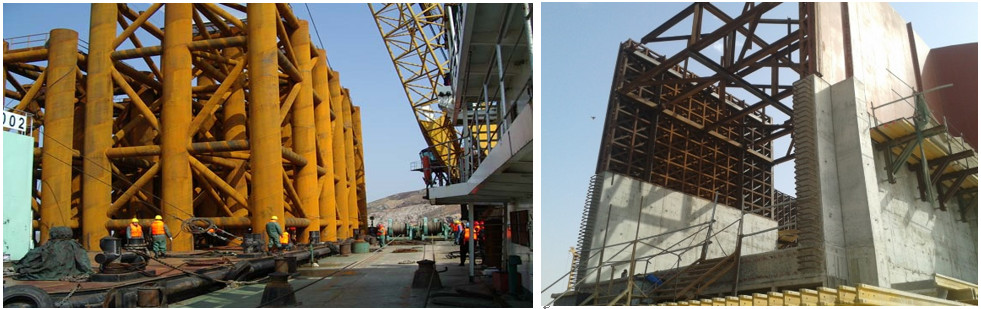
2.1 Temporary Steel Support
Temporary steel supports are widely used to provide additional support during bridge construction and heavy lifting operations.
Typical applications include:
Girder temporary support
Steel structure support
Equipment support
Jacking support
Temporary load transfer
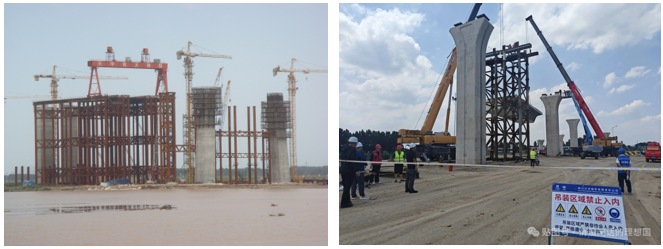
2.2 Common components may include:
Steel columns
Steel beams
Base plates
Connection plates
Bracing members
Adjustable support components
Proper installation and alignment are important to ensure stability during construction.
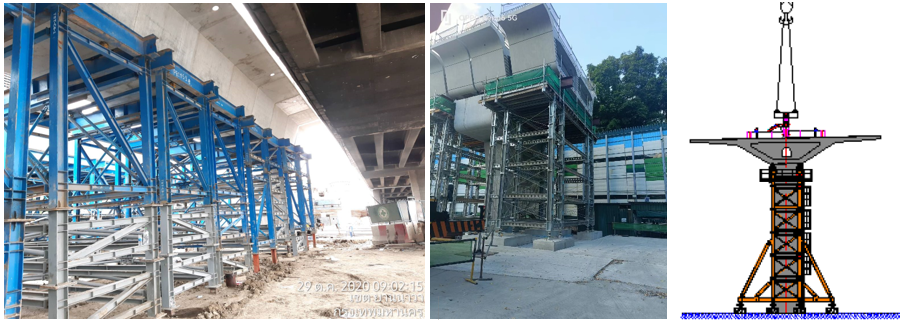
2.3 Temporary Towers
Temporary towers can be used to provide vertical support for heavy structural components and construction equipment.
Applications may include:
Girder erection
Temporary structural support
Heavy lifting operations
Equipment support
Construction staging
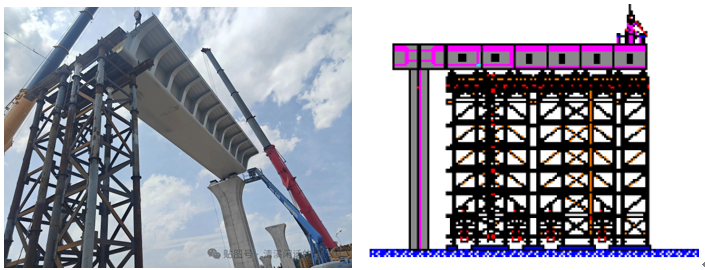
2.4 Key considerations include:
Required load capacity
Tower height
Foundation condition
Bracing arrangement
Installation sequence
Access for inspection and maintenance
2.5 Supporting Frames
Supporting frames provide temporary structural support for bridge components, equipment, and construction activities.
Typical applications include:
Girder support
Segment support
Equipment assembly
Steel structure installation
Temporary load transfer
Supporting frames may be fabricated according to project requirements and assembled on site.
2.6 Temporary Platforms
Temporary platforms provide safe working areas for construction personnel and equipment.
Applications include:
Girder installation
Steel structure works
Equipment assembly
Inspection and maintenance
Hydraulic equipment installation
Construction access
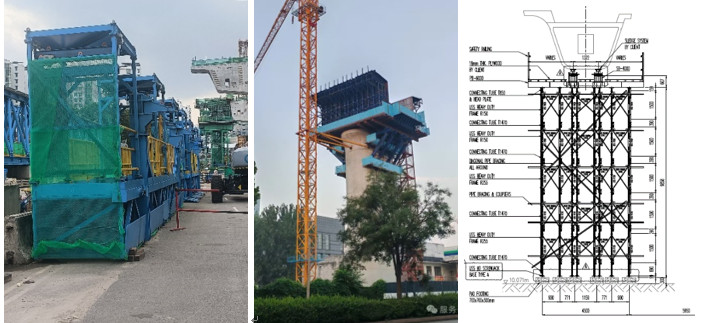
2.7 Temporary platforms may include:
Steel working platforms
Maintenance platforms
Access platforms
Equipment platforms
Safe access, adequate structural capacity, guardrails, and proper working arrangements should be considered during installation.
2.8 Bracing Systems
Temporary bracing systems help maintain structural stability during construction and installation.
Applications include:
Steel structure erection
Girder installation
Temporary support
Equipment assembly
Structural alignment
Bracing may be used to control movement and maintain stability until permanent connections or structural systems are completed.
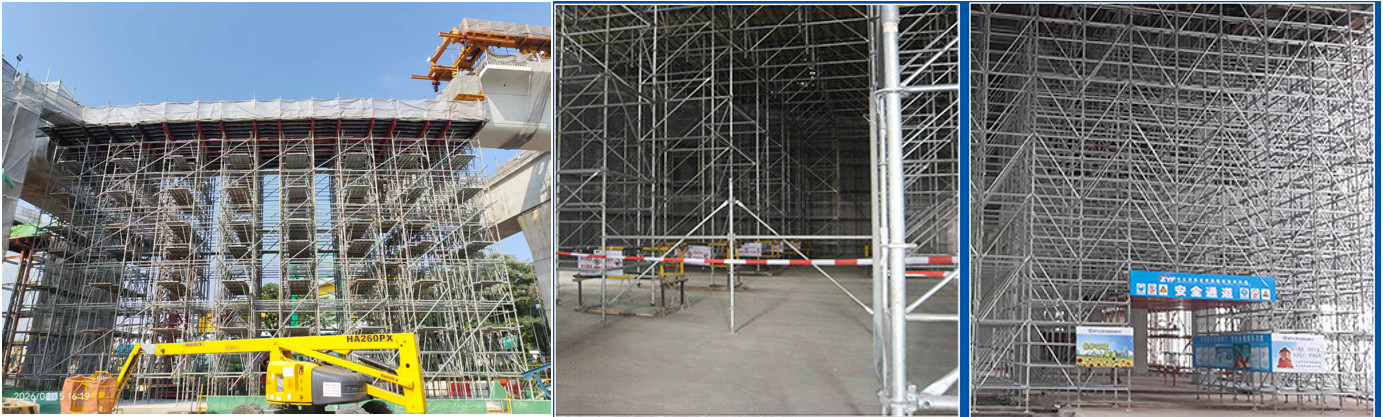
2.9 Typical components include:
Steel braces
Cross bracing
Tie rods
Connection plates
Bolted connections
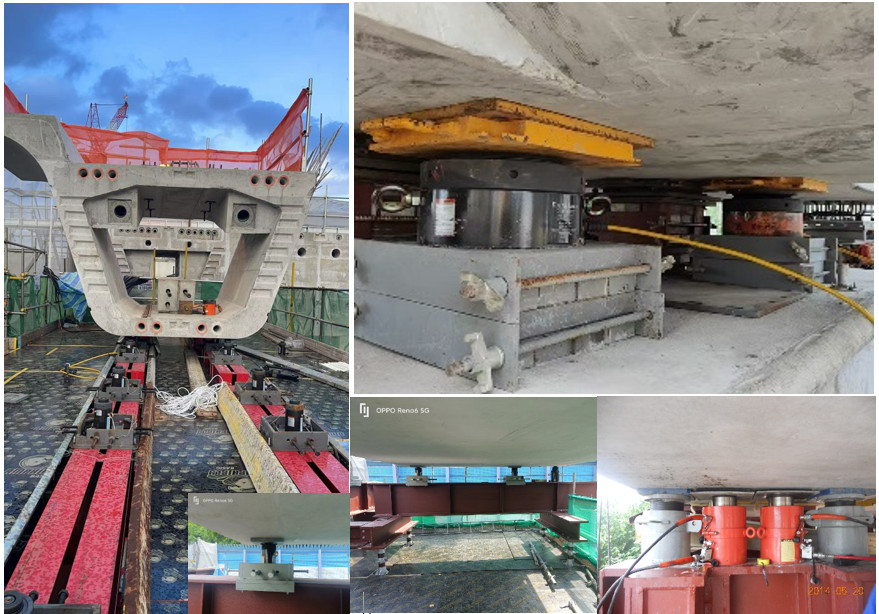
2.10 Jacking Support Systems
Jacking systems are frequently used for lifting, lowering, adjustment, alignment, and temporary support during bridge construction.
Typical equipment includes:
Hydraulic Jack
Hydraulic Cylinder
Hydraulic Pump
Pressure Gauge
Hydraulic Hose
Control Valve
Mechanical Support
Applications include:
Girder lifting
Structural adjustment
Temporary load transfer
Equipment installation
Equipment dismantling
Bridge component positioning
Hydraulic jacking operations require careful coordination between lifting equipment, support systems, and site personnel.
3. Temporary Support During Girder Erection
Temporary support systems are particularly important during girder erection.
A typical sequence may include:
Preparation
Review the erection sequence
Prepare support locations
Inspect temporary structures
Confirm lifting and jacking equipment
Installation
Install temporary supports
Install bracing systems
Position hydraulic jacks
Check alignment and stability
Lifting and Adjustment
Carry out controlled hydraulic lifting
Adjust structural position
Monitor movement
Transfer loads as required
Finalization
Complete permanent connections
Remove temporary supports
Dismantle temporary structures
Inspect the completed installation
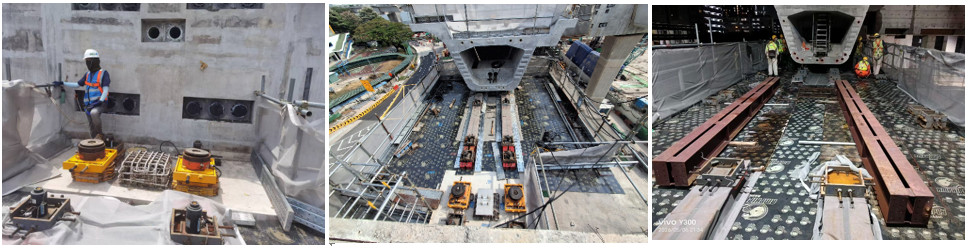
4. Temporary Works and Construction Equipment
Temporary works are closely connected with bridge construction equipment.
Typical equipment and products include:
Hydraulic Equipment
Hydraulic Jacks
Hydraulic Pumps
Hydraulic Cylinders
Hydraulic Hoses
Pressure Gauges
Hydraulic Fittings
Steel Components
Steel Beams
Steel Columns
Steel Plates
Bracing Members
Connection Components
Installation Tools
Hydraulic Torque Wrenches
Torque Wrenches
Lifting Accessories
Measuring Equipment
Safety and Access
Temporary Platforms
Guardrails
Access Systems
Safety Equipment
5. Temporary Works During Equipment Installation and Dismantling
Temporary support systems are also important when installing or dismantling large bridge construction equipment.
For example:
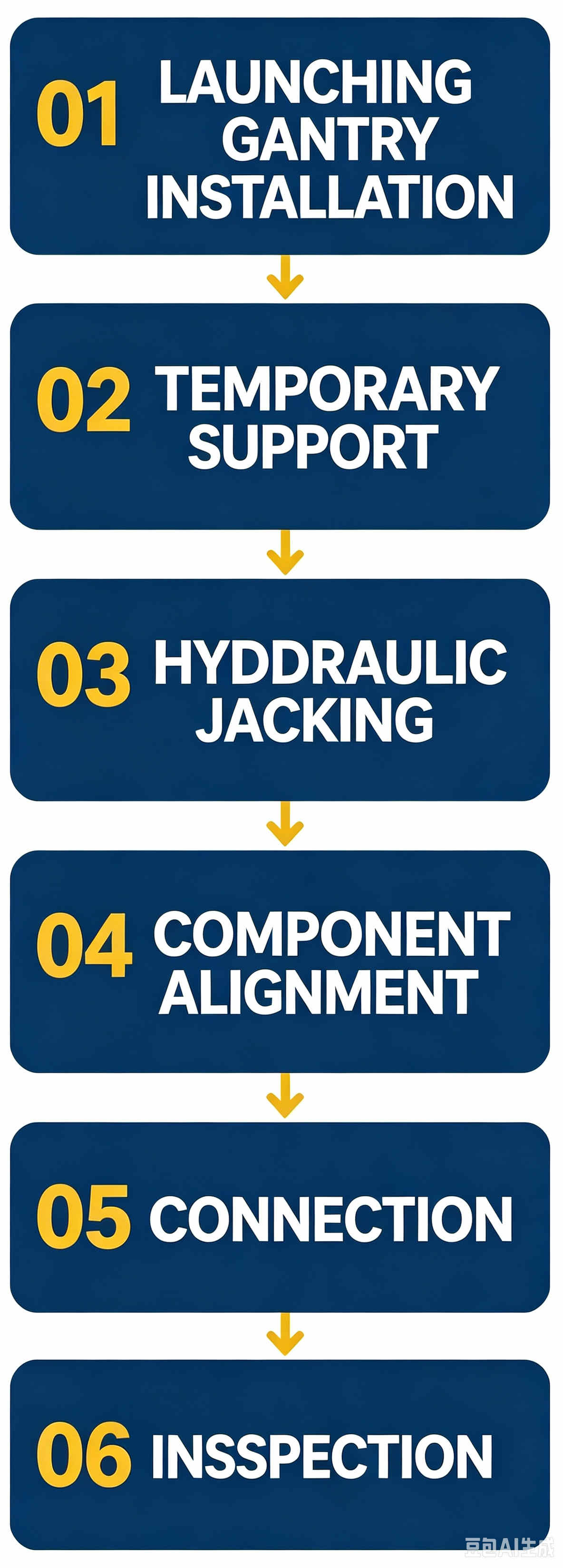
The same principles may apply during dismantling, particularly when heavy components need to be supported, lowered, or transferred safely.
6. Practical Considerations
Temporary works should always be planned according to the actual project conditions.
Important considerations include:
Structural stability
Load capacity
Foundation condition
Construction sequence
Lifting arrangement
Hydraulic capacity
Working space
Access and safety
Installation and dismantling procedures
Temporary structures should be properly designed, checked, installed, inspected, and used according to applicable project requirements and engineering standards.
BridgeConstructionHub provides practical construction knowledge and sourcing support. Final temporary works design, structural calculations, and engineering approval should be carried out by qualified professionals responsible for the project.
7. Temporary Works Sourcing Support
BridgeConstructionHub can assist contractors and project teams in sourcing products and equipment related to temporary works, including:
Hydraulic Jacks
Hydraulic Pumps
Hydraulic Cylinders
Steel Support Components
Bracing Components
Lifting Accessories
Temporary Platform Components
Fasteners
Installation Tools
Construction Consumables
For project-specific requirements, we can help identify suitable products and connect customers with appropriate suppliers.
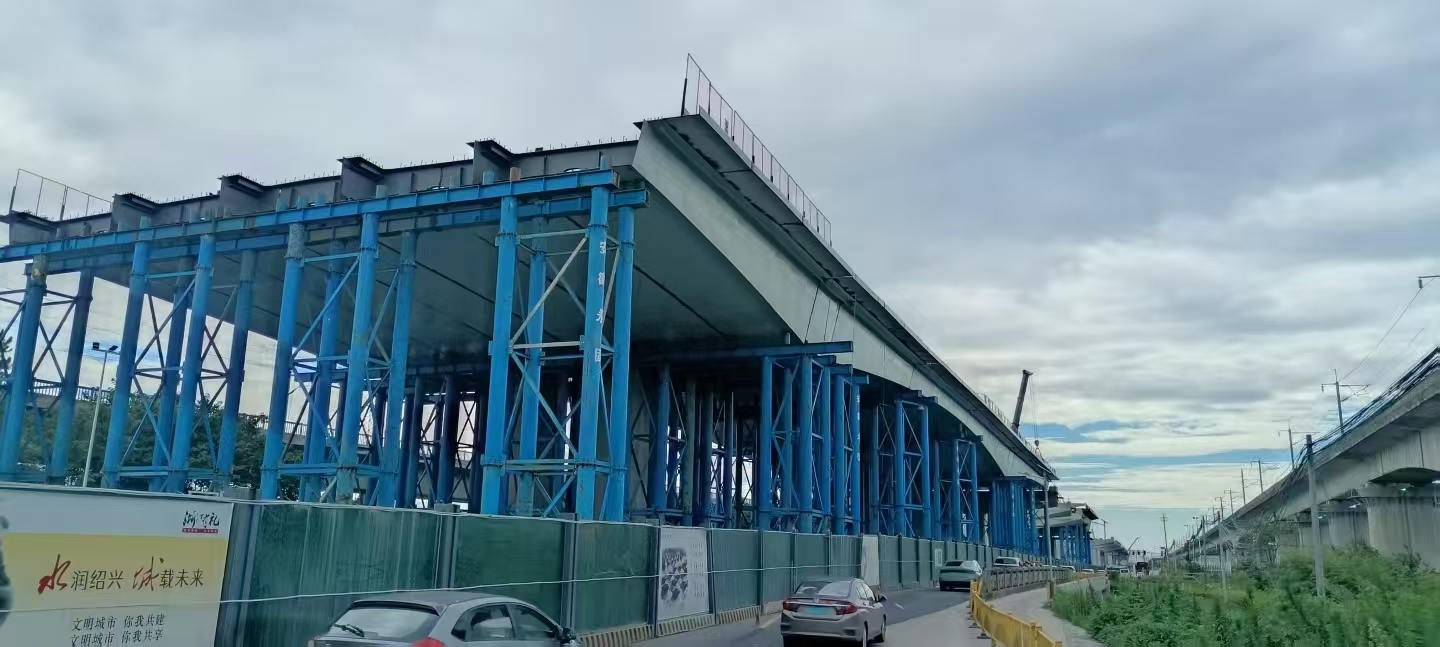
8. Why Temporary Works Experience Matters
Temporary works are often only present for a limited period, but they can have a significant impact on construction safety and project efficiency.
Successful temporary works require an understanding of:
Construction sequence
Load transfer
Lifting operations
Hydraulic systems
Structural stability
Site conditions
Equipment installation
Dismantling procedures
Practical construction experience helps project teams identify potential problems before they occur and select appropriate equipment and support solutions.